Defending Country from Invasive Weeds & Feral Predators
Today, Polygala (Polygala myrtifolia) is one of several invasive plant species infiltrating the native ecosystems of the Eyre Peninsula—particularly within Coffin Bay. Alongside other invasive weeds such as Aleppo Pines (Pines halepensis), African Daisy (Senecio pterophorus) and Wild Freesia (Freesia alba) these species spread rapidly, displacing native flora, altering ecological balance, and accelerating the decline of this fragile and critically endangered landscape.
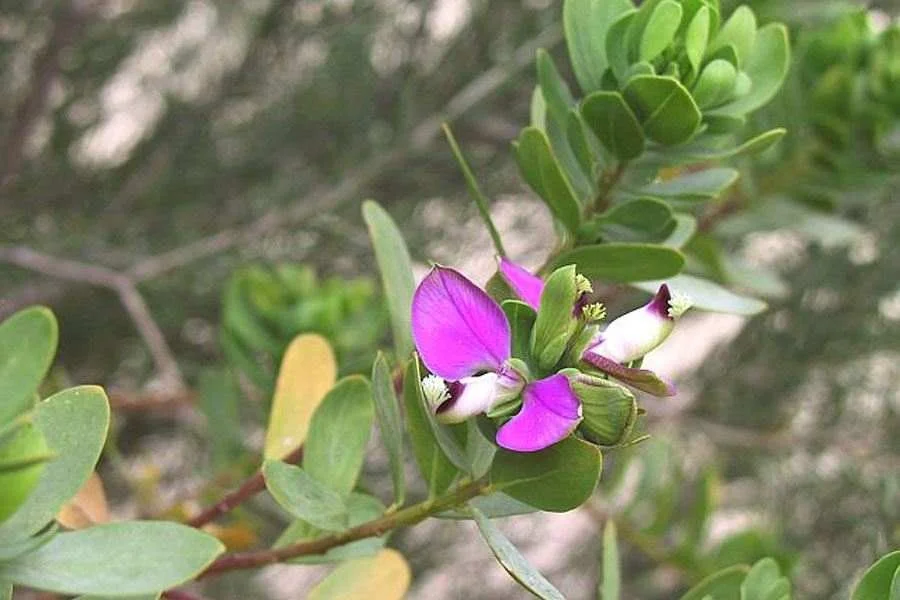
Polygala myrtifolia, commonly known as Myrtle-leaf Milkwort
Invasive Species and Feral Predator Threats – Protecting Coffin Bay’s Unique Ecosystem
Why Are These Weeds a Serious Threat
Invasive plants such as Polygala (Myrtle-leaf milkwort), Aleppo Pines (Pines halepensis), African Daisy (Senecio pterophorus) and Wild Freesia (Freesia alba) spread aggressively, outcompeting native flora and reducing biodiversity. They disrupt ecosystem functions, alter soil and vegetation structures, and threaten the regeneration of important native species like Drooping She-oak (Allocasuarina verticillata) and River Red Gum (Eucalyptus camaldulensis) along with countless understory species vital to ecosystem health.
But invasive plants are only part of the story. Feral predators, including cats and foxes, pose a direct threat to native wildlife, particularly small marsupials and endangered species. Without targeted management, these predators can devastate populations of western pygmy possums, native rodents, ground-nesting birds, and other vulnerable species, further destabilizing Coffin Bay’s ecosystems.
How These Threats Spread?
Polygala: Seeds are dispersed by water, birds, ants, garden waste, and contaminated soil or equipment. Ant-attracting structures (elaiosomes) help spread locally, and human activity spreads them further.
Aleppo Pines: Wind-dispersed seeds allow these trees to establish quickly, forming dense stands that shade out native vegetation.
African Daisy: Seeds are spread by wind, animals, and human activity, thriving in disturbed soils and open areas.
Wild Freesia: Reproduce via seeds, underground corms (‘bulbs’), and bulbils. These are spread by water, contaminated soil, garden waste, and road maintenance activities. Dense infestations can outcompete native grasses and orchids, with up to 1,500 corms per square metre recorded in bushland areas.
Feral Predators: Cats and foxes travel widely, hunting native animals. Their impact is amplified in fragmented habitats or areas where native species are already struggling to survive.
Lifecycle & Identification
Polygala: Dense shrub up to 3 m, green oval leaves, purple/pink/mauve flowers mainly late winter to summer. Seeds germinate in autumn but can sprout any time given moisture.
Aleppo Pines: Evergreen trees up to 20 m, needle-like leaves, woody cones that release seeds in summer.
African Daisy: Low-growing, spreading plants with bright daisy-like flowers. Produces prolific seeds that germinate quickly.
Freesias: Low-growing bulbous plants, with underground corms ~15 mm across, small bulbils in leaf axils, and spring flowers.
Feral Predators: Cats are small, nocturnal hunters; foxes are larger and highly adaptable. Both species are secretive, making monitoring and control essential for native species survival.
Declared Pest Status
Polygala and other key invasive species are declared plants under the Landscape South Australia Act 2019, meaning their movement, sale, or introduction is prohibited, and landowners must control infestations.
Best Practice Management
Long-term control requires ongoing effort:
Polygala & African Daisy: Targeted herbicide applications, hand-pulling or shallow digging for smaller plants, and follow-up removal of seedlings are essential.
Aleppo Pines: Forestry-approved herbicides or mechanical removal, combined with follow-up monitoring, help prevent re-establishment.
Freesias: Manual removal by carefully digging out bulbs/corms, cutting flowers before seeding to prevent spread (similar to Agapanthus, Watsonia, and Sparaxis), proper disposal via landfill or solarization, and using herbicides such as glyphosate for tougher infestations. Control is challenging due to abundant corms and seeds and requires consistent effort over multiple seasons.
Feral Predators: Effective control combines exclusion fencing, humane trapping, and monitoring to protect endangered species like the western pygmy possum. Safe havens are established where native wildlife can thrive without predator pressure.
Fire Management: Prescribed burns can stimulate germination and assist control when combined with other methods, particularly for Polygala. Taking Action in Coffin Bay
The Yarnbala Foundation protects Coffin Bay by educating the community, restoring native biodiversity, controlling invasive species, and managing feral predators
Actions you can take
Learn to identify invasive plants and signs of feral predators
Report infestations
Participate in local weed removal events
Avoid dumping garden waste
Clean equipment and gear after visiting infested areas
How Else You Can Help
Your support directly contributes to on-ground efforts controlling invasive plants, restoring native habitats, and protecting wildlife from feral predators. By donating to the Yarnbala Foundation, you help fund:
Weed and tree control programs
Feral predator monitoring and safe haven initiatives
Community engagement and education
Ongoing habitat restoration projects
Together, we can stop the spread of invasive species, safeguard native wildlife, and ensure Coffin Bay’s precious ecosystems thrive for generations to come.Your support will directly contribute to on-ground efforts to control and manage invasive species such as Polygala, Aleppo Pines, and African Daisy across the Eyre Peninsula. By donating to the Yarnbala Foundation, you’ll help fund long-term weed and tree control programs, support community engagement, and ensure the ongoing restoration of Coffin Bay’s precious natural habitats.
Together, we can stop the spread of invasive plants and trees and safeguard the health and biodiversity of our coastal environments for future generations.