Protecting the Grassy She-oak Woodlands on Eyre Peninsula
A Rare and Fragile Ecosystem
The land of Yarnbala, in Coffin Bay, South Australia along with the surrounding area to the north of Yarnbala, represents one of the last remaining untouched remnants of the Grassy She-oak Woodland on Calcrete — a rare and fragile ecosystem unique to the Eyre and Yorke Peninsula’s in South Australia. Remarkably, this old-growth woodland has remained in its natural state, undisturbed by development.
A Critically Endangered landscape
Nestled within the township boundaries of one of South Australia's fastest-growing coastal communities, this precious forest is the largest remaining parcel of vacant land in the area. As urban expansion accelerates, due to popularity growth in coastal lifestyle it faces increasing pressure from development.
Yarnbala, surpassing the surrounding National and Conservation Parks, where former farmland, altered fire regimes, and other disturbances have changed what was once intact Grassy She-oak woodland. Coffin Bay is geographically unique — bordered by National and Conservation Parks and encircled by inland bay systems, it is effectively land- and water-locked. The only area remaining for potential township expansion is the deferred urban land, which includes this rare Grassy She-oak woodland. Protecting it has never been more critical.
Once widespread across large areas of the Eyre and Yorke Peninsula, the Grassy She-oak Woodland now remains in only 6% of its original extent and is classified under Commonwealth of Australia as 'critically endangered,' facing threats at both national and state levels. This remarkable landscape, vital to our environment, also holds deep cultural and spiritual significance for the Indigenous peoples of the Eyre Peninsula.
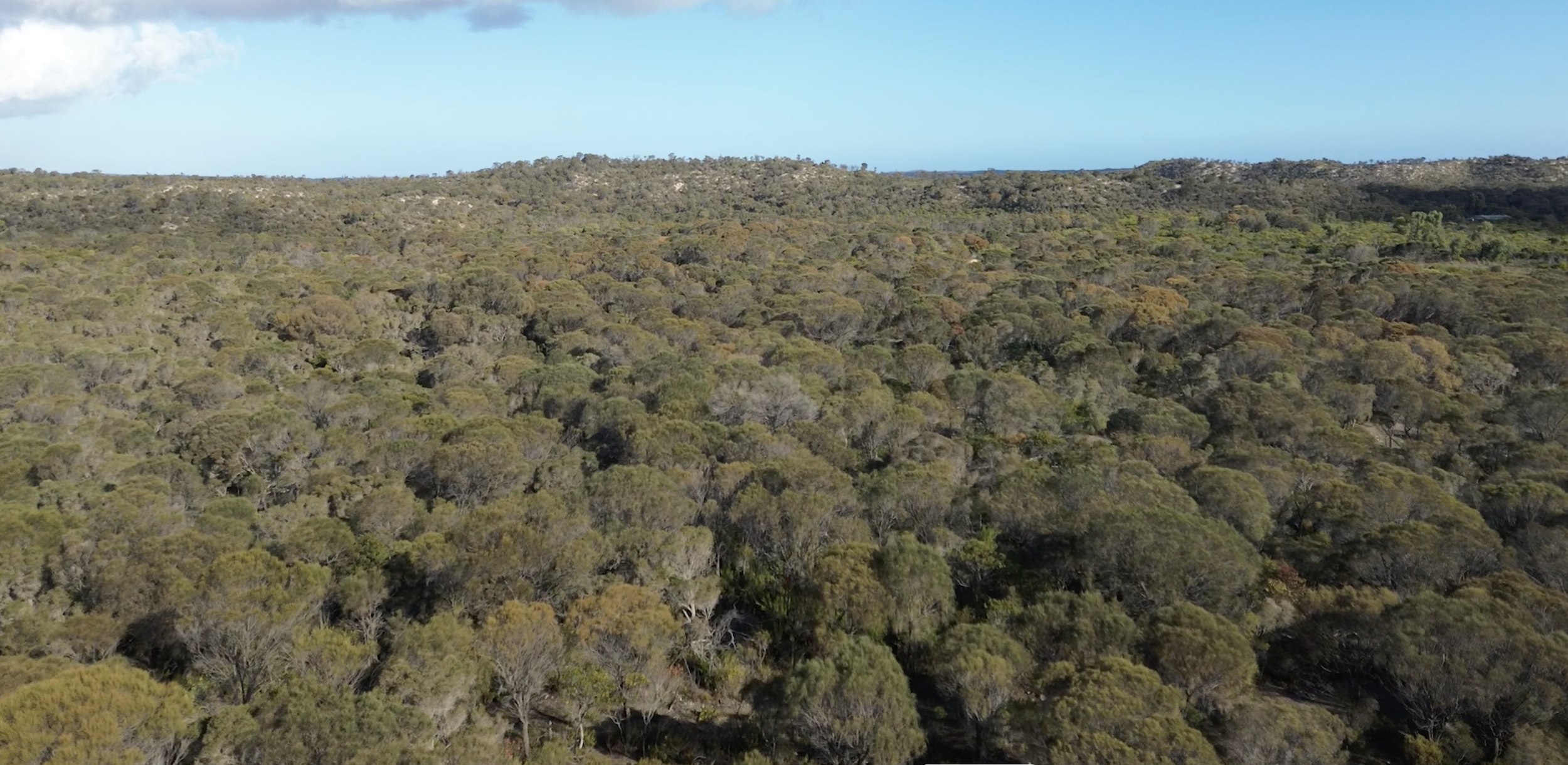
One of the last remaining untouched remnants of the Grassy She-oak Woodland at Yarnbala
Cultural Significance and Traditional Knowledge
For thousands of years, the Nauo, Narungga/Nharangga, Wirangu, and neighbouring Barngarla and Gugada peoples have lived in and cared for these grassy woodlands, developing a deep understanding of their natural environment. They established dynamic cultures that sustained both people and the land, using traditional knowledge to manage resources in a way that supported biodiversity and long-term survival.
This grassy woodland historically provided habitat for indigenous people as large grazing animals were used for food, sinew and skins, such as the western grey kangaroo, tammar wallaby, and canopy trees for birds and arboreal species such as possums and reptiles. Other culturally important animals that live in she-oak grassy woodlands on calcrete include echidna, quolls, snakes and goannas.
The drooping she-oaks that characterise this ecological community have been traditionally used for a wide array of purposes, ranging from building shelters to hunting implements such as boomerangs, fishing spears, spear throwers and grubbing sticks. The oldest known surviving boomerang was made from a drooping she-oak in South Australia approximately 11,000 years ago. Young cones and foliage were chewed to alleviate thirst during dry periods. Seeds were roasted and eaten. Drooping she-oaks also provided critical wood for campfires.
During summer the Nauo constructed a semi-circular dwelling or shelter from branches of drooping she-oak trees which acted as a wind break. In wet weather steep-sided shelters were made from drooping she-oak branches which readily shed water. Other plants found in this ecological community traditionally provided food and medicine.
Pastoral Impact and Tree Decline
Early pastoralists selectively targeted drooping she-oaks due to their value. The trees were highly palatable to livestock, with sheep and other herbivores grazing on low branches, young trees, saplings, and seedlings, preventing natural regeneration. In addition to grazing pressures, the durable timber of the drooping she-oak was heavily harvested for firewood, tools, fencing, buildings, and yard construction further contributing to their decline.
The Coffin Bay National Park Example
One significant example of this impact is seen in what now is known as the Coffin Bay National Park. Originally used as farmland before being designated as a National Park, this 31,000-hectare area was once mostly covered in grassy she-oak woodland. However, heavy stocking rates prevented fresh growth and regeneration, leading to prolonged periods of exposed soil. Over time, this caused the loss of shallow soils, leaving large areas of bare rock. Intensive and selective grazing by herbivores also altered the composition and density of native grasses and herbs, resulting in a shift from native perennial grasses to introduced annual species and the disappearance of many native herb species.
Loss of She-oak Woodlands
As the drooping she-oak over-storey declined due to overgrazing, the remaining native grass layer was overtaken by coast beard-heath (Leucopogon parviflorus) shrubland, further reducing native grass cover. The impact of heavy grazing was made worse when rabbits were introduced to the Eyre Peninsula in the 1800s, devastating this vegetation, further accelerating habitat degradation.
The once-extensive grassy she-oak woodland that covered large parts of the Eyre and Yorke Peninsulas disappeared with European settlement by the late 1850s, as much of the land had been cleared for pastoral use. Incredibly, it has taken 172 years after its loss to be officially recognised - only in 2022 was the grassy she-oak woodland declared ‘Critically Endangered’ under Australian law.
Impacts on Native Fauna
With the she-oak grassy woodland now highly fragmented within a heavily modified landscape, many patches no longer provide suitable habitat for native fauna, particularly woodland birds. One example is the Diamond Firetail (Stagonopleura guttata), a seed-eating bird species closely associated with she-oak grassy woodlands, which has dramatically declined in the region. Similarly, the Glossy Black Cockatoo (Calyptorhynchus lathami halmaturinus), which feeds almost exclusively on drooping she-oak seeds and selects specific trees for feeding, has suffered from habitat fragmentation and loss. This subspecies is now absent from the Eyre Peninsula and is currently restricted to Kangaroo Island.
The Role of Kangaroo Overgrazing
Another major factor preventing the regeneration of drooping she-oaks is the overabundance of kangaroos. Research has shown that kangaroos are now the most abundant herbivore in the region and a leading cause of recruitment failure for the species. Their increased numbers have significantly limited or even halted she-oak regeneration on the Eyre Peninsula, further threatening this already endangered ecological community.
Fire and Regeneration
Burnt drooping she-oak trees have been observed to regenerate after fire through basal re-sprouting. However, without protection from herbivores, these resprouting trees are at high risk of suppression and mortality due to increased grazing pressure. While drooping she-oaks can survive low-temperature fires, however when they are exposed to high-temperature fires and extreme heat, they do not regrow from their roots or stems, and their canopy and trunks are usually destroyed by radiant heat. Severe fires can wipe out both mature trees and seedlings entirely.
Inappropriate fire regimes, such as intense and frequent fires in Coffin Bay National and Conservation Parks, have resulted in a mortality rate of approximately 75% for drooping she-oaks. Additionally, burnt trees that have already released their seeds due to fire desiccation no longer provide a food source for bird species, and cone production in the short term is significantly reduced, further destabilising the ecosystem.
Yarnbala’s Role in Conservation
The Yarnbala Foundation is dedicated to identifying and securing remnant patches of this critically endangered ecological community, creating protected corridors where native flora and fauna can regenerate naturally. Focusing on keystone species that depend on this habitat, we aim to support their recovery and ensure the long-term survival of this vital ecosystem.
Despite these challenges, there is a critical opportunity to act before it’s too late. The Yarnbala Foundation has identified an exceptional remnant of grassy she-oak woodland directly adjacent to Yarnbala—one of the last of its kind. However, this remanent grassy she-oak woodland sits within the township precinct and remains unprotected by any conservation covenant, making it highly vulnerable to development. Without intervention, this irreplaceable habitat, which has remained in its natural state for hundreds of years, could be lost forever. Large-scale investment is urgently needed to secure and safeguard this land, ensuring its protection for future generations and preserving its ecological and cultural significance.
How You Can Help
Your support will directly contribute to the protection and restoration of one of South Australia’s most endangered ecological communities. By investing in this initiative, you’ll help safeguard the last remaining remnants of Grassy She-oak Woodland, create secure habitat corridors, and preserve a landscape rich in cultural and environmental value.
With your help, the Yarnbala Foundation can prevent irreversible loss, protect critical habitat from development, and support long-term conservation outcomes for the Eyre Peninsula’s unique biodiversity.
Together, we can protect this ancient landscape — before it disappears forever.